Introducing Luminai Topology: Empowering Agents in Healthcare
Introducing Luminai Topology: Empowering Agents in Healthcare
Introducing Luminai Topology: Empowering Agents in Healthcare
· By Mack Lu
Every day, operational teams across the health system make thousands of decisions. Where should this referral go? Does this procedure need prior authorization? Which provider can see this patient, and when? These decisions directly affect how quickly patients receive care, how much time staff spends on administrative tasks, and how the organization performs financially.
As we've written before, the workflows behind these critical decisions depend on complex rules, exceptions, and institutional knowledge scattered across systems, documents, and people's heads. Much of that knowledge is undocumented, and it keeps changing as policies and operational needs evolve. The result is heavy administrative burden, persistent bottlenecks and AI programs that don’t scale.
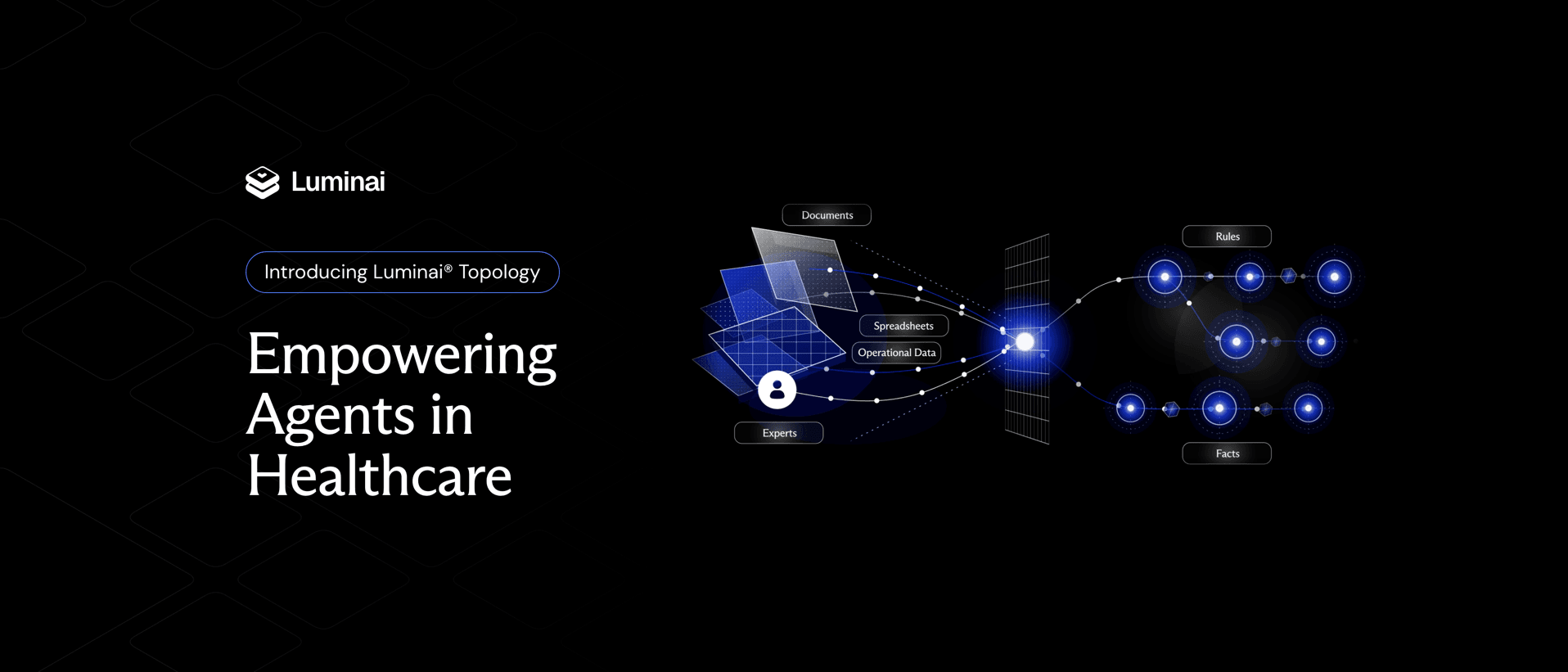
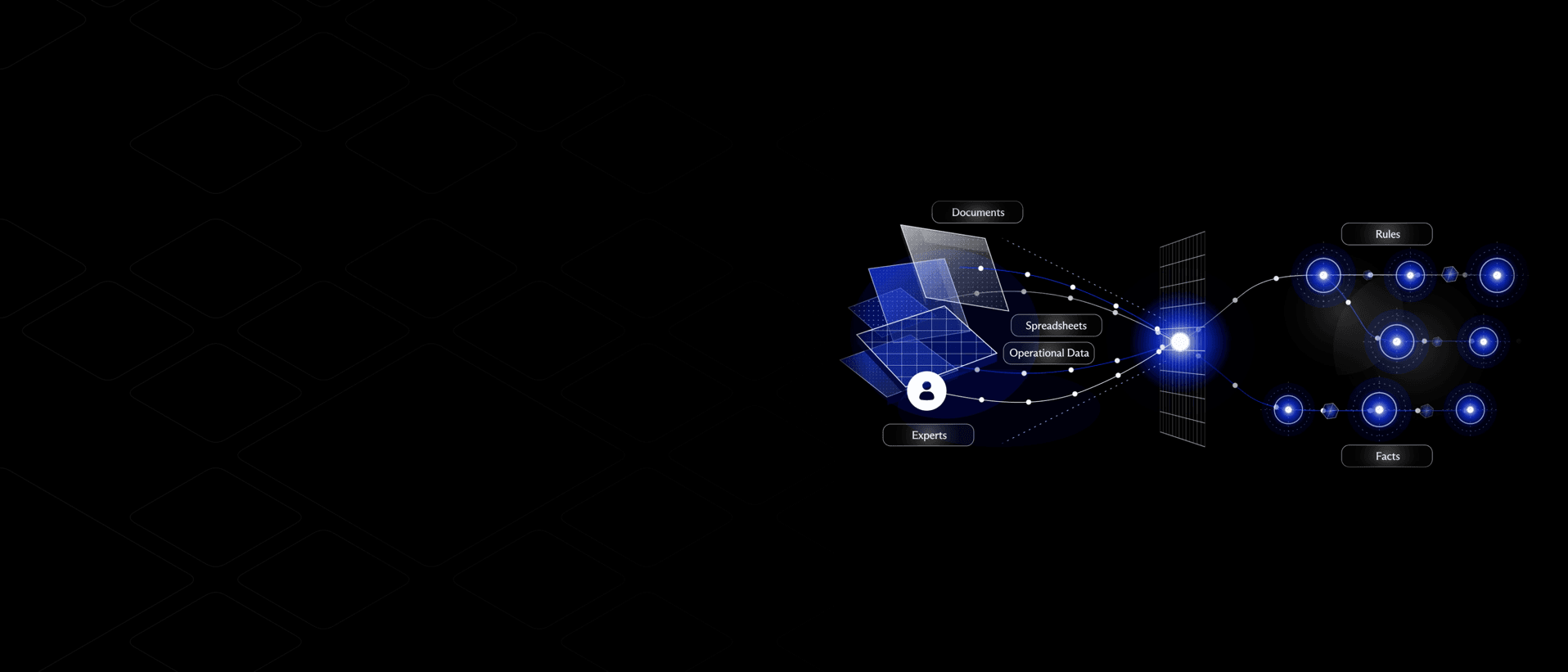
Today, we're introducing the Luminai Topology, which brings fragmented knowledge together in one place, so AI agents can make decisions the way your best people do. By turning institutional knowledge into structured, traceable rules, the Luminai Topology helps health systems reduce manual work, scale automation across the organization, and deliver better care.
From what you know to what works best
In mathematics, topology is the study of structure and connection. The Luminai Topology is a connected model of how your health system makes decisions: the rules your teams follow, the facts those rules depend on, and the outcomes each decision leads to. It powers every automation on the Luminai platform, from fax intake and referral routing to scheduling, payer contract intelligence, and more. To do that, it encodes three kinds of knowledge.
The rules you know. The Luminai Topology turns documented logic and expert knowledge into structured rules and facts that AI can apply safely and consistently. At one of our health system partners, many patient journeys begin with a faxed referral that must be routed to one of many destinations. The routing logic, with its specialty mappings, nuanced requirements and exceptions stored in spreadsheets and documents, becomes a set of rules maintained in one place. As a result, referrals are routed automatically and consistently, staff spend less time on manual processing, and patients reach the right care sooner.
The rules you didn't know you had. Sally in scheduling knows Dr. Brooks only sees new patients in the afternoon. Nobody wrote it down. The Luminai Topology uncovers rules like this by learning from decision traces in your operational data, then surfaces them with supporting evidence for your experts to approve, refine, or reject. Once structured, that knowledge is applied consistently across workflows, so patients are booked into slots that actually work, with fewer reschedules and fewer errors that delay care.
The rules that work best. A good decision is measured by what happens next: whether the patient was scheduled, whether they kept the appointment, and whether the claim was paid. The Luminai Topology connects upstream decisions to downstream outcome data and suggests rule changes that optimize for your patient and operational outcomes. For example, if referrals for a certain procedure routinely get sent to a clinic that redirects patients elsewhere, the Topology can connect the routing decisions to the delays that follow. It then surfaces the pattern and proposes a routing change for your team to review, so patients get seen sooner.
Why frontier models aren’t enough
Frontier AI models are powerful, but they don't inherently know how your health system operates: your specific referral-routing requirements, payer policies, provider preferences, or any organization-specific exceptions.
The Luminai Topology gives AI agents the missing knowledge. It structures and supplies the rules you already know, learns the ones you don’t, and suggests new ones based on outcomes. It’s model-agnostic, so your automations improve as frontier models do.
Knowledge that compounds
One of the biggest AI implementation challenges for health systems today is moving beyond individual automation projects and pilots to scaling AI deployments across their operations. The Luminai Topology is designed to make this easier. It connects what is learned across use cases, so the rules and facts captured in one area improve decisions in another.
For example, if claims for a certain procedure keep getting denied because a payer requires specific documentation, the Luminai Topology can learn that rule. The rule can then be used to flag missing documentation at referral intake, so the issue is caught weeks earlier instead of after the claim comes back.
Built to be trusted
Health systems need confidence that AI is following their organization's rules, and that they stay in control as workflows evolve. That's why the Luminai Topology was designed around four principles.
Structured. Knowledge from documents, people and operational data becomes reviewable rules that AI can use for reliable automation. The rules can be tested, executed, and reused consistently, which reduces variability and keeps every decision grounded in facts.
Versioned. Rule changes are tracked across time. For example, if a payer changes a policy requirement, one rule is updated and every agent applies it from the effective date. Past decisions stay linked to the version that was in effect, so you can always see which rule drove a decision and measure how changes affect outcomes.
Traceable. Every decision links back to its source: a document, an expert's confirmation, or a pattern in your data. Operators can see why a decision was made, know where to look when something needs to change, and evaluate performance. This audit trail gives teams the oversight they need to govern AI with confidence.
Customized. Every health system is unique, and your Topology reflects exactly how yours works. Rules, preferences, and requirements are built in, so the AI works the way your teams already do. Your Topology stays yours: data is never shared across customers, and every change goes through your own approvals and permissions.
Better operational outcomes
The Luminai Topology provides the intelligence layer AI agents need to work reliably inside the complexity of a health system. Referrals are routed faster, patients get scheduled sooner, and fewer claims come back denied. Because every decision connects to downstream outcomes, operations keep improving on the measures that matter, like time to care and clean claims. And every workflow you add makes the next one faster to deploy, and the previous one more comprehensive.
Learn how the Luminai Topology can help your health system automate complex workflows. Request a demo.
Read more
Luminai + Cleveland Clinic: Scottsdale Institute Fireside Chat, “What an Effective AI Platform Partnership Looks Like”
, by Luminai

Who We Hire to Make AI Actually Work Inside Health Systems
, by Vamsi Chitters & Ali Feldman
Three Months In: Why I Bet on Luminai
, by Sean O'Brien

Cleveland Clinic Partners with Luminai to Transform Health System Operations
, by Cleveland Clinic

Why AI Often Fails to Deliver Value for Health Systems and What It Takes to Reach Production
, by Mack Lu
Welcoming Harry Kirschner to Luminai
, by Harry Kirschner

Welcoming Jordan Silvergleid as Head of Strategy
, by Kesava Kirupa Dinakaran and Jordan Silvergleid

Why Cleveland Clinic Chose This AI Startup To Rewire Key Healthcare Operations
, by Luminai

Luminai CEO leads panel on The New Guard of Digital Health at ViVE Healthcare Conference
, by Luminai

Introducing Luminai, the AI platform for health system operations
, by Kesava Kirupa Dinakaran

A Letter from our Founder
, by Kesava Kirupa Dinakaran