The Bar for Healthcare AI Is Rising: Three Takeaways from HLTH 2026
The Bar for Healthcare AI Is Rising: Three Takeaways from HLTH 2026

The Bar for Healthcare AI Is Rising: Three Takeaways from HLTH 2026
· By Luminai
At HLTH 2026, we spoke with dozens of health system leaders about their priorities for AI, and one theme came up consistently: they're becoming much more selective about which solutions are worth evaluating.
With continued margin pressure and limited capacity across IT and operational teams, health systems are scrutinizing new technology investments more closely. The focus on AI remains, but vendors face a higher bar to demonstrate that their solutions can deliver measurable results in real healthcare environments.
Leaders want to know where AI can make the biggest operational impact, whether a vendor has successfully delivered results at other health systems, and what it will take to bring a solution into production. They're also thinking beyond the first use case, looking for investments that can support broader automation over time rather than adding more disconnected tools to an already complex technology environment.
Three themes from our conversations stood out as we look toward 2027.
1. Start small, prove value quickly
With financial pressure driving greater scrutiny of technology investments, health systems are prioritizing AI opportunities that address specific operational challenges and offer a clear path to measurable returns.
For example, despite years of investment in digitization, health systems still rely heavily on labor-intensive processes to receive, interpret, and route faxed information. This creates inefficiencies across operational teams and can even result in a poor patient experience or delayed care.
At Luminai, we recognized early that identifying the right use case was only part of the equation. Delivering measurable results quickly also requires technology built for the complexity of healthcare operations and a deployment approach that doesn't place the burden on already stretched internal teams. Our AI platform and forward-deployed engineering model was designed to get automation into production and deliver value faster.
For organizations managing tight budgets and competing priorities, a focused use case with a clear business case may be a more practical starting point than a broad AI initiative with an uncertain path to value.
The takeaway for 2027: Traction will come when vendors partner deeply with business and operational stakeholders to identify workflows that can deliver quick, measurable improvements.
2. Proven outcomes are the price of admission
One of the strongest messages we heard at HLTH was that health systems have limited appetite for lengthy vendor evaluations without evidence that a solution has demonstrated hard ROI.
With internal resources stretched thin, business owners need to justify bringing new vendors into the organization. So they start by asking two questions: 1) Who else has successfully deployed this solution, and 2) What results have they achieved?
Referenceable outcomes can make a significant difference. Measurable results at a comparable health system make it easier to build internal confidence and secure support for an evaluation. In every conversation we had, our colleagues were most interested to hear that at Cleveland Clinic, Luminai's AI-powered fax and referral automation reduced average handling time from 10 minutes to under one minute and eliminated a three-day processing backlog, enabling same-day fax handling. The first use case went live in approximately 70 days, and Luminai now automatically handles 770,000 faxes annually. These results, detailed in our Cleveland Clinic partnership recap, show the measurable improvements, defined path to production, and demonstrated performance in a complex environment that health systems are asking for.
The takeaway for 2027: Demonstrated results in real healthcare environments will increasingly determine which AI vendors earn serious consideration.
3. Getting AI into production requires more than capable models
AI models are becoming increasingly sophisticated, but automating complex healthcare operations requires more than the ability to extract information or execute an isolated task. Much of the knowledge that drives administrative work is scattered across systems, documents, and the experience of individual employees. And that knowledge often differs significantly between health systems.
Consider a faxed referral for a patient with migraines. An AI model may be able to extract the patient's information and identify the requested specialty. But determining which department should receive that referral requires understanding the health system's specific routing rules, specialized clinics, and provider preferences. These decisions are often guided by years of institutional knowledge that has never been formally documented.
To automate workflows reliably, AI needs both the ability to interpret unstructured information and the operational context required to act on it correctly. At Luminai, we're addressing these challenges through a platform that transforms unstructured healthcare data into actionable information and uses our Luminai Topology to capture the institution-specific knowledge that governs operational decisions.
But technology is only part of the equation. Successful automation also requires integrating with existing systems, accounting for workflow exceptions, and helping teams adapt to new ways of working. With internal resources already constrained, health systems need vendors that can take responsibility for much of that complexity.
The takeaway for 2027: The next frontier isn't just smarter AI models. It's understanding the unique complexities of each health system and turning them into reliable, real-world automation.
Looking ahead
Our conversations at HLTH reinforced how much expectations for healthcare AI have changed. Health systems want practical solutions that deliver measurable results, without adding unnecessary complexity or placing more demands on already stretched teams.
At Luminai, we believe the opportunity is to start with high-impact administrative workflows and leverage early wins and insights to build from there. That means combining proven AI technology with an understanding of each health system's unique operations and the hands-on expertise to make automation work in production.
As we head into 2027, we're excited to help more health systems put that approach into practice.
Read more
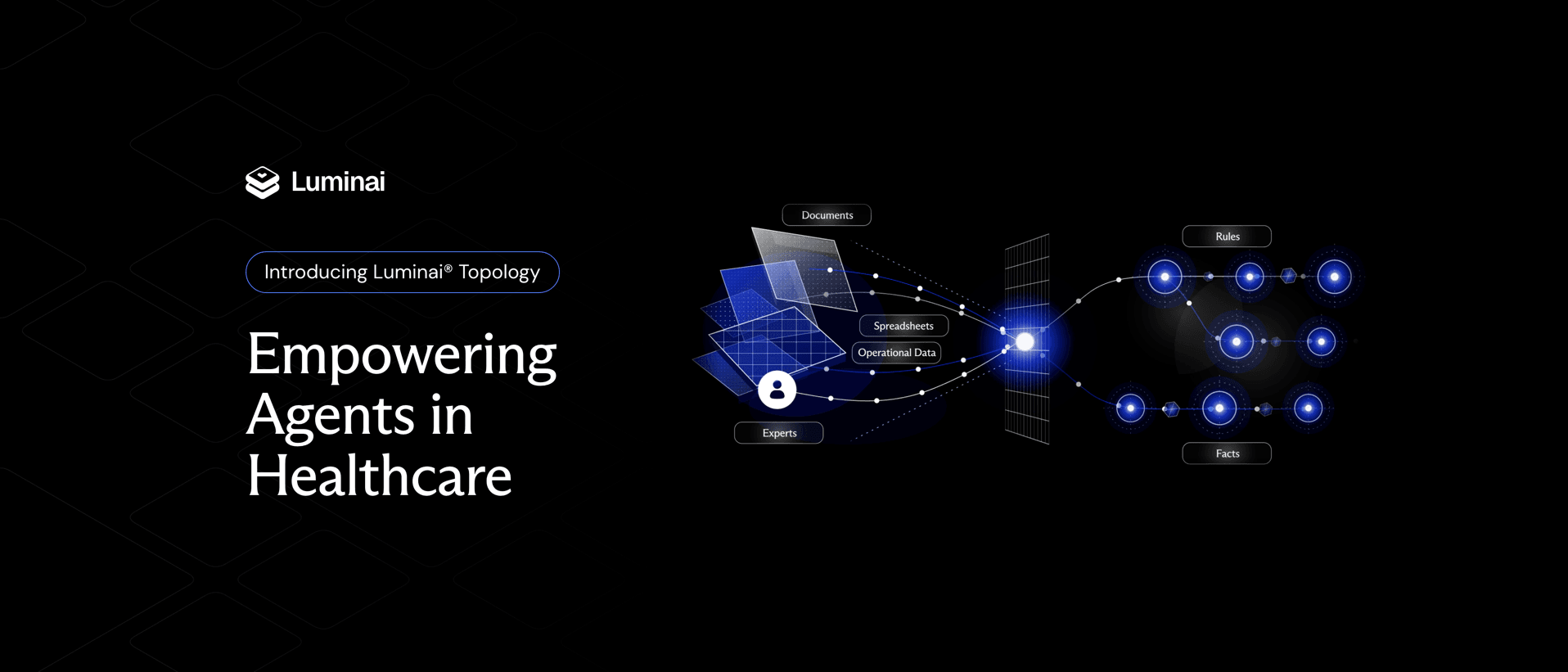
Introducing Luminai Topology: Empowering Agents in Healthcare
, by Mack Lu
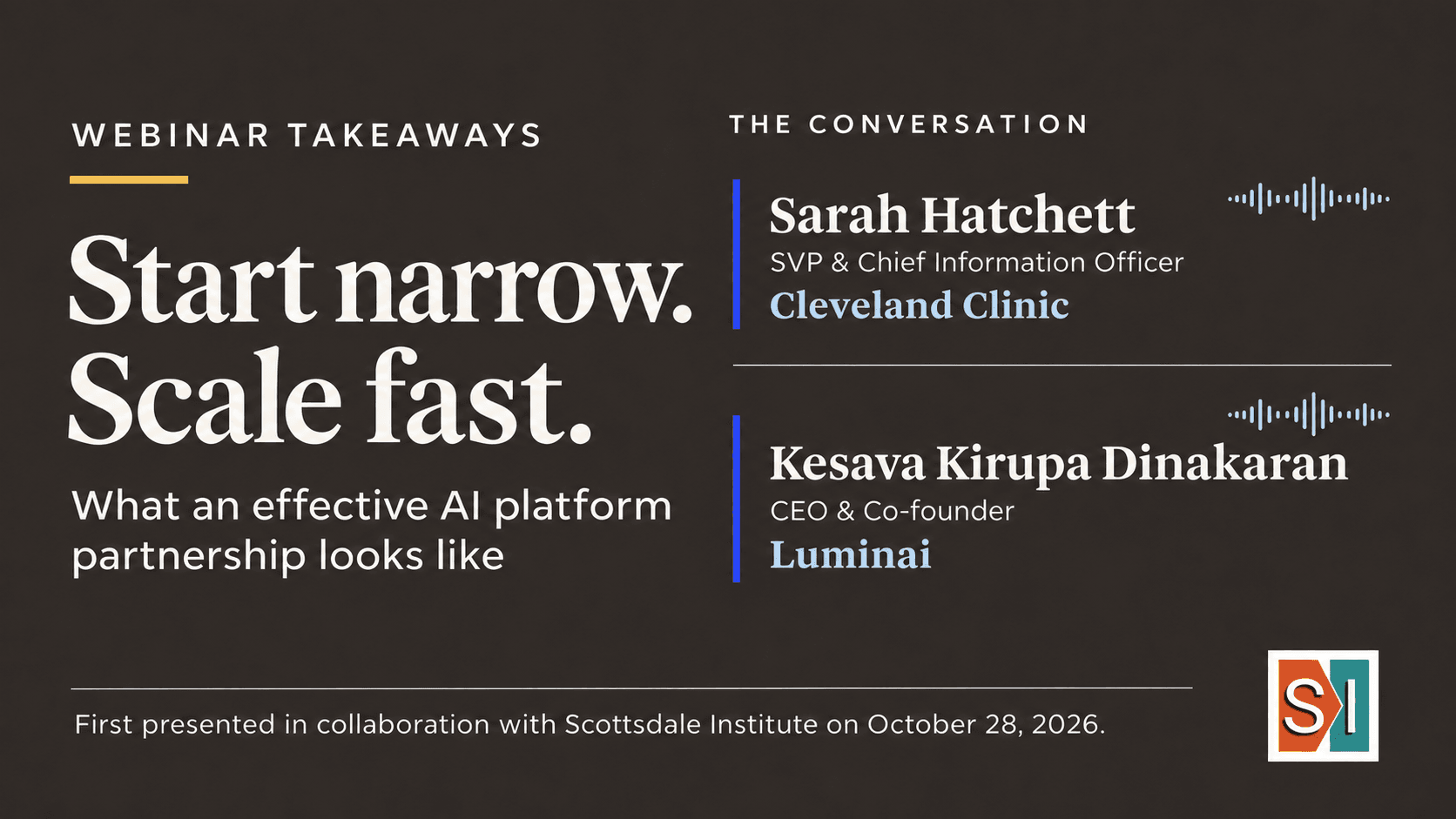
Luminai + Cleveland Clinic: Scottsdale Institute Fireside Chat, “What an Effective AI Platform Partnership Looks Like”
, by Luminai

Who We Hire to Make AI Actually Work Inside Health Systems
, by Vamsi Chitters & Ali Feldman

Three Months In: Why I Bet on Luminai
, by Sean O'Brien

Cleveland Clinic Partners with Luminai to Transform Health System Operations
, by Cleveland Clinic

Why AI Often Fails to Deliver Value for Health Systems and What It Takes to Reach Production
, by Mack Lu

Welcoming Harry Kirschner to Luminai
, by Harry Kirschner

Welcoming Jordan Silvergleid as Head of Strategy
, by Kesava Kirupa Dinakaran and Jordan Silvergleid
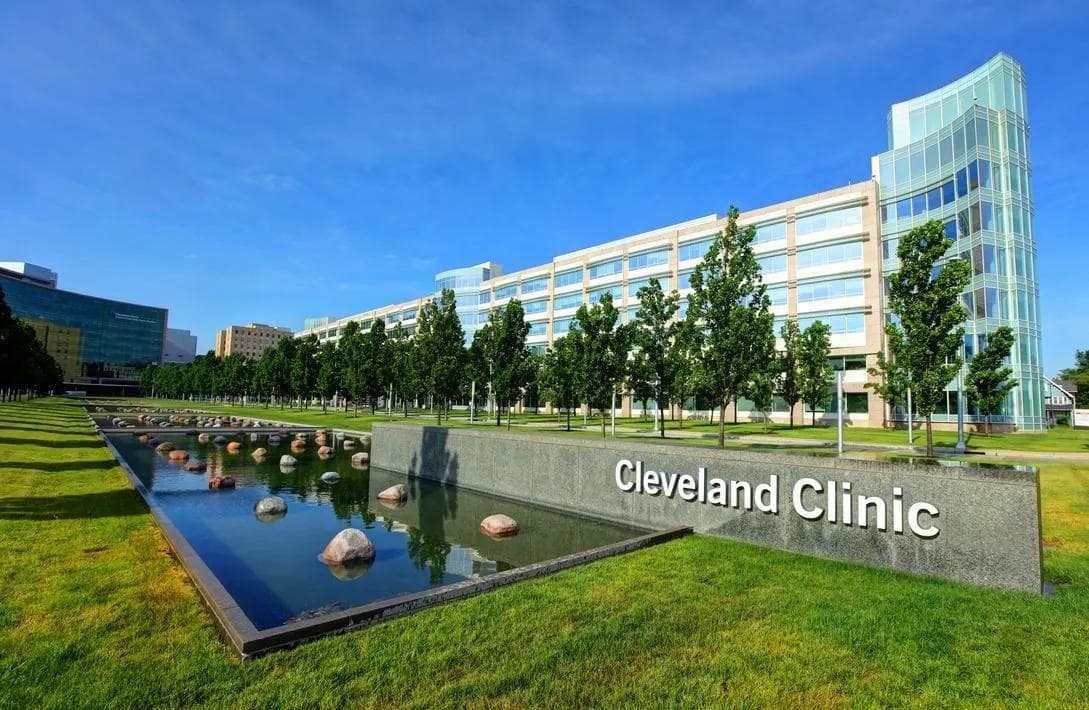
Why Cleveland Clinic Chose This AI Startup To Rewire Key Healthcare Operations
, by Luminai

Luminai CEO leads panel on The New Guard of Digital Health at ViVE Healthcare Conference
, by Luminai

Introducing Luminai, the AI platform for health system operations
, by Kesava Kirupa Dinakaran

A Letter from our Founder
, by Kesava Kirupa Dinakaran